


2026: 8 thư viện Java giúp bạn code nhanh và “sạch” hơn
Trong hệ sinh thái Java khổng lồ, việc chọn đúng thư viện đôi khi quan trọng hơn chính đoạn code bạn viết. Thư viện tốt giúp tránh “tự chế cái bánh xe thứ 101”, nâng độ ổn định và giảm đáng kể lượng boilerplate phải bảo trì.
Dưới đây là 8 thư viện Java được dùng rất thường xuyên cho JSON, test, tiện ích, tài liệu Office, XML, mapping đối tượng… rất phù hợp để bạn chuẩn hóa stack cho năm 2026.
1. Jackson — Chuẩn vàng cho xử lý JSON
Khi làm việc với JSON trong Java, Jackson gần như là tiêu chuẩn mặc định: hiệu năng tốt, linh hoạt, lại được nhiều framework (như Spring Boot) tích hợp sẵn.
Điểm mạnh:
- Hiệu năng cao trong serialize/deserialize.
- Hỗ trợ nhiều mô hình: Streaming API, Tree Model, Data Binding.
- Annotation phong phú:
@JsonProperty,@JsonIgnore, v.v. - Xử lý tốt generics, object lồng nhau, kiểu phức tạp.
Ví dụ:
import com.fasterxml.jackson.core.JsonProcessingException;
import com.fasterxml.jackson.databind.ObjectMapper;

public class JacksonExample {
    public static void main(String[] args) {
        ObjectMapper mapper = new ObjectMapper();
        User user = new User("Jackson", "jackson@example.com");

        try {
            // Serialize: Java object -> JSON string
            String jsonStr = mapper.writeValueAsString(user);
            // {"name":"Jackson","email":"jackson@example.com"}

            // Deserialize: JSON string -> Java object
            User userObj = mapper.readValue(jsonStr, User.class);
        } catch (JsonProcessingException e) {
            e.printStackTrace();
        }
    }

    static class User {
        public String name;
        public String email;

        public User() {}
        public User(String name, String email) {
            this.name = name;
            this.email = email;
        }
    }
}
2. JUnit 5 — Nền tảng cho unit test hiện đại
JUnit 5 là framework test chuẩn cho Java hiện nay: kiến trúc module hóa, annotation rõ ràng, tích hợp tốt với IDE.[web:374][web:378][web:383]
Điểm mạnh:
- Lifecycle bằng annotation:
@Test,@BeforeEach,@AfterEach…[web:374] - Assertions phong phú:
assertEquals,assertThrows,assertAll.[web:376][web:380] - Hỗ trợ parameterized test, nested test.
- Chạy test trực tiếp trong IntelliJ, Eclipse.
Ví dụ:
import org.junit.jupiter.api.Test;
import static org.junit.jupiter.api.Assertions.*;

class CalculatorTest {

    @Test
    void testDivision() {
        Calculator calc = new Calculator();

        assertAll("Division",
            () -> assertEquals(2, calc.divide(4, 2)),
            () -> assertThrows(ArithmeticException.class, () -> calc.divide(1, 0))
        );
    }

    static class Calculator {
        int divide(int a, int b) {
            return a / b;
        }
    }
}
3. Apache Commons — Hộp đồ nghề “xài hoài không hết”
Apache Commons là “bộ đồ nghề” kinh điển của dev Java, đặc biệt là các module:
commons-lang3cho String, Object, Number utilities.commons-collections4cho thao tác Collections nâng cao.commons-iocho xử lý file/stream tiện lợi.
Ví dụ:
import org.apache.commons.lang3.StringUtils;
import org.apache.commons.collections4.CollectionUtils;

import java.util.List;

public class CommonsExample {
    public static void main(String[] args) {
        // String handling
        String str = StringUtils.capitalize("java"); // "Java"

        // Collection handling
        List<String> list = getListFromDb();
        if (CollectionUtils.isNotEmpty(list)) {
            // business logic...
        }
    }

    private static List<String> getListFromDb() {
        return List.of("a", "b");
    }
}
4. Apache POI — Làm chủ Excel/Word trong Java
Khi dự án đụng đến import/export Excel, làm báo cáo, hợp đồng Word…, Apache POI là lựa chọn đáng tin cậy.
Điểm mạnh:
- Hỗ trợ
.xls(HSSF) và.xlsx(XSSF). - Điều khiển chi tiết style, font, border, merge cell, formula.
- SXSSF cho export Excel dung lượng lớn mà không “đốt” RAM.
Ví dụ:
import org.apache.poi.ss.usermodel.*;
import org.apache.poi.xssf.usermodel.XSSFWorkbook;

import java.io.FileOutputStream;
import java.io.IOException;

public class PoiExample {
    public static void main(String[] args) {
        try (Workbook workbook = new XSSFWorkbook()) {
            Sheet sheet = workbook.createSheet("Annual Report");
            Row row = sheet.createRow(0);

            Cell cell = row.createCell(0);
            cell.setCellValue("Total Sales");

            try (FileOutputStream out = new FileOutputStream("report.xlsx")) {
                workbook.write(out);
            }
        } catch (IOException e) {
            e.printStackTrace();
        }
    }
}
5. JAXB — XML vẫn còn đất dụng võ
Trong các hệ thống tài chính, chính phủ, hay tích hợp với chuẩn cũ, XML vẫn rất phổ biến. JAXB giúp map Java object ↔ XML một cách tự nhiên.
Điểm mạnh:
- Mapping hai chiều: Java Bean ↔ XML.
- Annotation như
@XmlElement,@XmlAttribute,@XmlRootElement. - Có thể kết hợp XSD để validate schema.
Ví dụ:
import jakarta.xml.bind.*;

import jakarta.xml.bind.annotation.XmlElement;
import jakarta.xml.bind.annotation.XmlRootElement;

@XmlRootElement(name = "server")
class ServerConfig {
    @XmlElement
    public int port = 8080;
    @XmlElement
    public String host = "localhost";
}

public class JaxbExample {
    public static void main(String[] args) throws JAXBException {
        JAXBContext context = JAXBContext.newInstance(ServerConfig.class);
        Marshaller marshaller = context.createMarshaller();
        marshaller.setProperty(Marshaller.JAXB_FORMATTED_OUTPUT, true);

        ServerConfig config = new ServerConfig();
        marshaller.marshal(config, System.out);
    }
}
6. Lombok — Tạm biệt boilerplate
Lombok cắt giảm lượng lớn code lặp: getter/setter, constructor, builder, logger…
Điểm mạnh:
@Datasinh getter/setter/toString/equals/hashCode.@Buildercho builder pattern thân thiện.@Slf4jauto tạo logger.@SneakyThrowsgiảm “rác” checked exception.
Ví dụ:
import lombok.Builder;
import lombok.Getter;
import lombok.ToString;

@Builder
@Getter
@ToString
public class Order {
    private String orderId;
    private double amount;
    private String status;

    public static void main(String[] args) {
        Order order = Order.builder()
            .orderId("ORD-2025")
            .amount(99.9)
            .status("PAID")
            .build();

        System.out.println(order);
    }
}
7. Guava — Immutable collection và nhiều hơn thế
Guava (từ Google) mang lại functional style và nhiều cấu trúc dữ liệu nâng cao.
Điểm mạnh:
- Immutable collection:
ImmutableList,ImmutableMap… - Kiểu collection mới:
Multiset,Multimap,BiMap. - Guava Cache cho local cache hiệu năng cao.
Splitter,Joinerxử lý chuỗi rất “sướng tay”.
Ví dụ:
import com.google.common.collect.ImmutableMap;
import com.google.common.base.Joiner;

import java.util.Map;

public class GuavaExample {
    public static void main(String[] args) {
        Map<String, Integer> scores = ImmutableMap.of("Alice", 90, "Bob", 85);

        String result = Joiner.on(" | ").skipNulls().join("Java", null, "Guava");
        // "Java | Guava"
        System.out.println(result);
    }
}
8. MapStruct — Mapping DTO ↔ Entity “nhanh như code tay”
Trong kiến trúc nhiều tầng, việc map Entity sang DTO lặp đi lặp lại rất nhiều. MapStruct giải quyết bằng cách generate code ở compile time:
- Không dùng reflection → rất nhanh.
- Type‑safe: mismatch field sẽ lỗi compile.
- Hỗ trợ rule mapping custom, multi‑source mapping, expression.
Ví dụ:
import org.mapstruct.Mapper;
import org.mapstruct.Mapping;
import org.mapstruct.factory.Mappers;

class User {
    public String name;
    public String birthday;
}

class UserDTO {
    public String name;
    public String birthDate;
}

@Mapper
public interface UserMapper {
    UserMapper INSTANCE = Mappers.getMapper(UserMapper.class);

    @Mapping(source = "birthday", target = "birthDate")
    UserDTO toDto(User user);
}

// Usage
class MapStructExample {
    public static void main(String[] args) {
        User user = new User();
        user.name = "Alice";
        user.birthday = "1990-01-01";

        UserDTO dto = UserMapper.INSTANCE.toDto(user);
        System.out.println(dto.birthDate);
    }
}
Đừng quên “thứ vũ khí thầm lặng”: môi trường local
Chọn đúng library giúp code nhanh hơn, nhưng rất nhiều dev Java đều biết: thứ “đốt” thời gian nhất lại là môi trường local:
- Nhiều version JDK (Java 8 cho legacy, Java 21 cho dự án mới).
- MySQL, PostgreSQL, Redis… cùng chạy trên một máy.
- Web server, reverse proxy để test local.
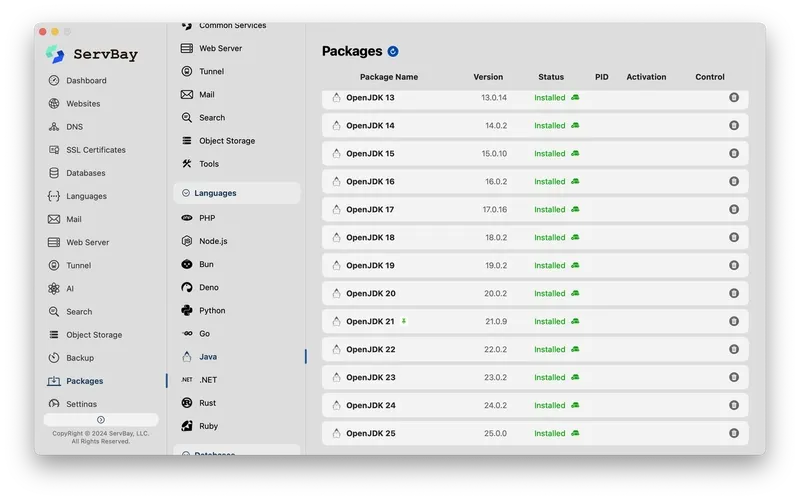 Nếu tự xoay bằng cài đặt thủ công hoặc script rời rạc, rất dễ rơi vào cảnh “chỉ chạy trên máy tôi”.
Ở đây, một công cụ quản lý local dev environment như ServBay tỏ ra hữu ích:
- Cho phép cài và quản lý nhiều runtime, DB, web server trong cùng một giao diện.
- Hỗ trợ đa version, giúp project Java cũ/mới cùng sống chung mà không dẫm chân nhau.
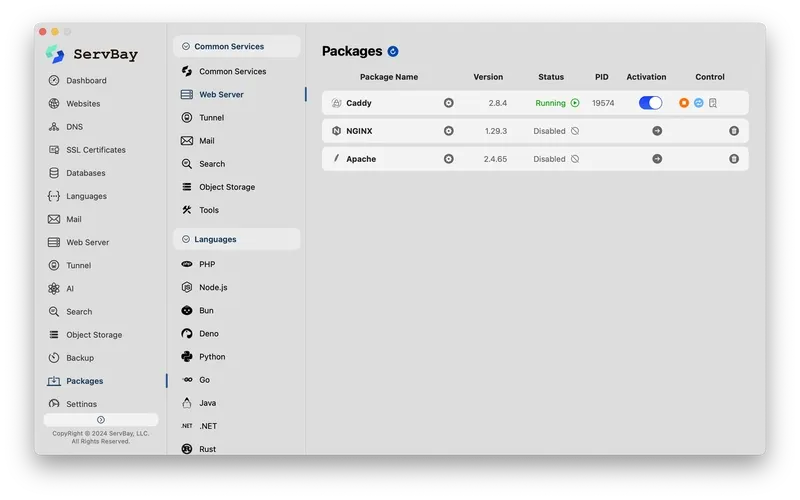
- Nếu bạn còn dùng thêm native module hay microservice viết bằng Rust, ServBay cũng có thể cung cấp sẵn một rust environment cạnh Java stack, giúp mix JVM + Rust một cách sạch sẽ và dễ kiểm soát hơn.
Từ Guava, Apache Commons ở tầng “nền”, tới Jackson và MapStruct ở tầng business, những thư viện này là backbone của Java hiện đại. Kết hợp với một local dev environment được quản lý tốt, bạn sẽ dành ít thời gian cho chuyện “vặn ốc hạ tầng”, và nhiều thời gian hơn cho kiến trúc, domain logic – nơi giá trị thực sự được tạo ra.
All rights reserved
