


Salesforce Data-Con-101 Exam Questions: Expert Guide for 2026 Success
Salesforce data professionals are in higher demand in 2026 than they were two years ago. Orgs that scaled fast now have data quality problems, broken integrations, and governance gaps sitting underneath everything. The people who can actually fix those problems aren't generalist admins. They're professionals who understand data architecture at a decision-making level. The Data-Con-101 certification demand exists in that space. It's not an entry-level credential and the exam doesn't treat it like one. Scenario-based questions, close answer choices, and time pressure that catches underprepared candidates off guard. Knowing what's tested and how it's tested before starting prep changes the entire experience.
What Is the Salesforce Data-Con-101 Certification
The Data-Con-101 certification targets Salesforce professionals working with data architecture, integration design, or governance as a core part of their daily role. Not people who occasionally run data imports but people whose work regularly involves schema decisions, external system connectivity, and data quality ownership. Admins handling complex data migrations, developers building integrations, and architects designing multi-org data strategies all sit within the intended audience. The exam validates that understanding at a level beyond platform familiarity . architecture, data migration planning, large data volume management, and data security and compliance. These aren't isolated topics on a list. A schema decision made during data modeling creates constraints that affect integration architecture choices three steps later. That chain of consequences runs through the exam constantly.
Understanding the Salesforce Data-Con-101 Exam Structure
60 questions. 105 minutes. Passing score of 65%. Those numbers look straightforward until the first full timed session lands differently than expected. Question stems run between 100 and 130 words before the actual question appears. Every sentence in that stem is either a constraint or a distractor. Missing one phrase like "without modifying the existing data model" or "with minimum admin overhead" changes the correct answer completely. That's not a knowledge problem. That's a reading problem that timed preparation fixes. Two answer choices on most questions are technically valid. The correct one is determined by the specific constraints in the scenario, not by which option sounds most complete. Candidates who haven't built that judgment through repeated exposure to exam-format questions find out the hard way on exam day. For a detailed breakdown of how each domain is weighted and what specific topics appear within them, the 2026 exam objectives breakdown covers the full domain structure worth reviewing before building a study schedule.
Why Data-Con-101 Exam Questions Are Important
Reading Salesforce documentation gives depth on individual topics. It doesn't prepare anyone for how the exam combines those topics inside organizational scenarios with competing constraints. That gap is where most first attempts fall short Working through realistic Data-Con-101 exam questions from early in prep does three things reading can't. It shows actual knowledge gaps rather than assumed ones. It builds the habit of long reading scenario stems carefully. And it develops pacing under time pressure, which is a completely separate skill from knowing the content. Candidates who wait until the final week to start working through questions consistently discover gaps too late to fix them. The score on that first timed session is almost always lower than expected. Getting that reality check in week one rather than week four is the difference between having time to fix problems and just hoping they don't appear on exam day.
Key Topics Frequently Covered in Data-Con-101 Exam Questions
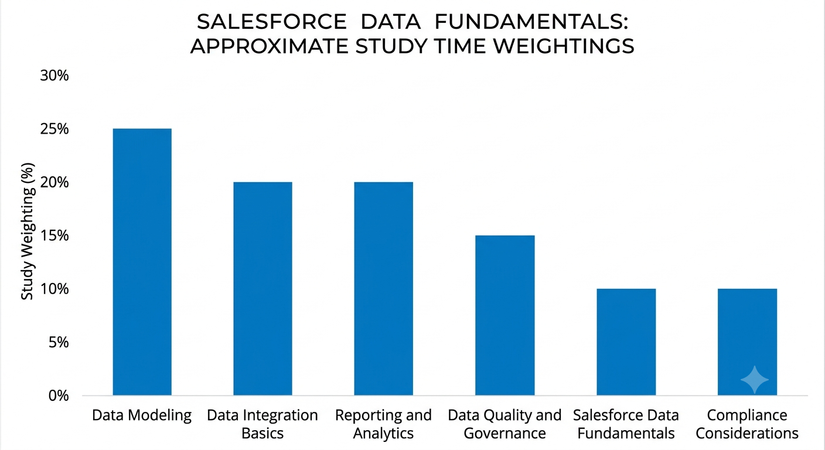
Salesforce Data Fundamentals: Object relationships, schema design decisions, and how data model choices affect platform performance downstream. Questions describe specific business requirements and ask for the correct architecture decision with justification.
Data Modeling Concepts: Lookup versus master-detail trade-offs, external objects, and how relationship types affect rollup summaries, cascade deletes, and record sharing behavior. Not definition questions. Consequence questions.
Data Quality and Governance: Duplicate management rules, validation rule design, data stewardship responsibilities, and how governance frameworks apply inside real Salesforce org contexts.
Data Integration Basics: API selection decisions, middleware patterns, platform events versus outbound messaging, and when each approach fits based on volume, timing, and reliability requirements described in the scenario.
Reporting and Analytics: Report type selection, cross-filter limitations, dashboard visibility rules, and how upstream data model decisions affect what reporting can and can't do.
Security and Compliance Considerations: Sharing rule conflicts, implicit sharing through role hierarchies, field-level security interactions, and how external sharing settings interact with community access. These appear inside architecture questions, not as standalone topics.
Expert Study Strategies for 2026 Success
Create a Structured Study Plan: Map existing Salesforce knowledge against the five exam domains in week one. Identify actual gaps rather than assumed ones. LDV management and integration architecture need focused attention for most candidates regardless of background or years of experience.
Focus on High-Weight Exam Domains: Data modeling and integration architecture carry the most weight and connect to every other domain. Weak foundations in either area show up across the entire paper, not just in domain-specific questions.
Work Through Realistic Questions: Get into Data-Con-101 exam questions by day 8. Struggling through hard questions early reveals where to focus. Waiting until feeling ready means discovering gaps with no time left to address them.
Review Mistakes and Weak Areas: Write one sentence after every wrong answer explaining the mistake. One sentence, not a paragraph. That single sentence forces genuine understanding rather than passive re-reading of answer explanations.
Join Salesforce Learning Communities: Trailblazer Community forums have active threads from candidates who sat this exam recently. Prep experiences from people who passed last month carry more current relevance than most published study guides.
How to Use Sample Questions Effectively
Memorization doesn't work on this exam. Scenario details change between questions to test understanding, not recall. Candidates who memorize answers to specific questions find that slightly different scenario framing on exam day makes everything feel unfamiliar.
Analyzing why wrong answers are wrong matters as much as understanding why the correct answer is correct. That analysis builds the judgment the exam tests. Skipping it and moving to the next question is the habit that keeps scores stuck.
Track performance by domain, not just overall score. An overall score of 68% can hide 44% accuracy in one domain that will fail the exam. Domain-level tracking from week two gives enough time to fix real gaps before they become exam-day problems.
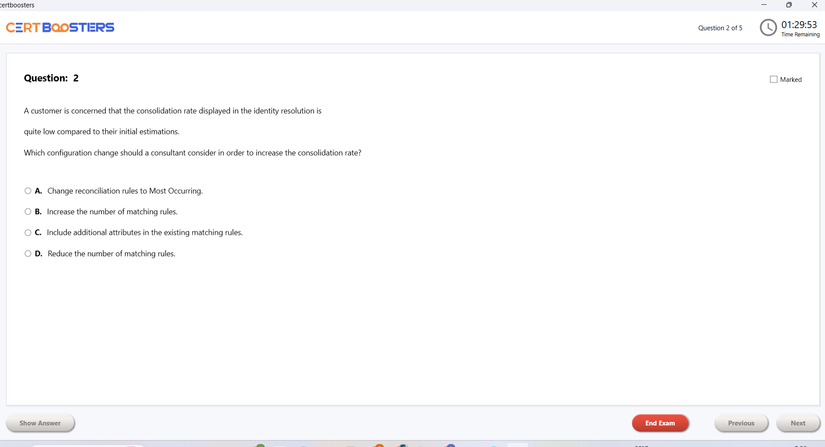
CertBoosters desktop software runs a real-time exam simulation with time tracking, question flagging, and full results with explanations after each completed session. The exam environment it replicates is close enough to the real thing that pacing habits built there transfer directly.
Candidates can explore the full question set directly through Data-Con-101 Exam Questions from CertBoosters.
Final Week Preparation Checklist
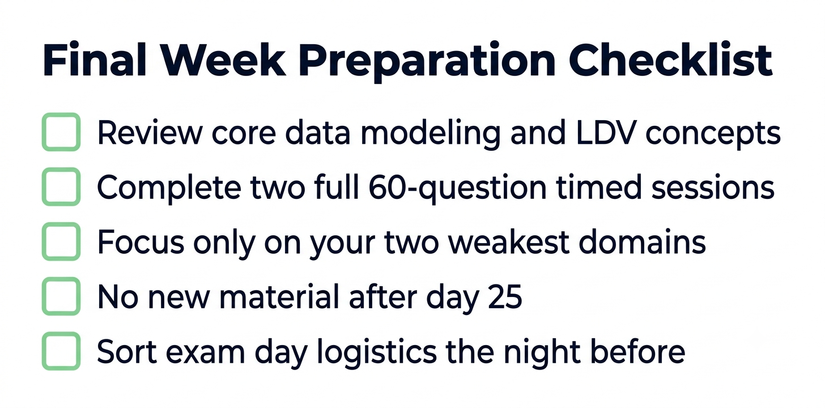
Review core concepts in data modeling, LDV management, and integration architecture only. No new material after day 25. New content that close to the exam creates confusion, not confidence.
Complete two full 60-question timed sessions in the final five days. Three consecutive sessions scoring above 70% is the signal that the exam date is the right next step.
Focus remaining study time on the two weakest domains only. Broad review at this stage spreads attention too thin to fix anything meaningfully.
Sort out exam-day logistics the night before. Test center location, identification requirements, and arrival time. Small practical preparation removes unnecessary stress before it starts.
Conclusion
The Data-Con-101 exam rewards candidates who prepare for how it asks questions, not just candidates who know the platform. Domain-level gap analysis in week one, realistic exam-format questions from day 8, timed full sessions from day 20, and honest mistake review throughout are what move scores consistently upward. Consistent preparation over 25 to 30 days beats cramming every time. The exam is passable on the first attempt for most candidates who approach it with the right structure. Build that structure early and the result follows.
Other Resources
Salesforce Data-Con-101 Sample Questions and Answers [2026 Updated]
Data-Con-101 Exam Objectives and Topics Explained (2026)
Data-Con-101_Exam_Cheat_Sheet
All rights reserved