


Building a Verification Gate for Non-Deterministic AI Video Outputs in Content Pipelines
The Verification Gap in Generative Asset Pipelines
When a team introduces AI-generated video or audio into a production pipeline, the first engineering problem is not creative quality — it is verification. Traditional QA assumes a stable input produces a stable, comparable output. Generative models break that assumption. The same prompt run twice can yield different framing, pacing, or audio characteristics, which means unit-test-style assertions ("output matches expected file") are structurally unavailable.
This matters most for teams building repeatable workflows around campaigns, demos, or creator content, where an asset has to pass some minimum bar before it reaches a reviewer, a client, or a scheduling system. Constraints worth naming up front:
- Outputs are non-deterministic across runs, even with similar prompts.
- There is no canonical "correct" output to diff against.
- Review has to scale beyond a single engineer eyeballing files.
- The pipeline needs to log enough metadata to reproduce a request, even if it cannot reproduce the exact output.
- Human review is unavoidable, but it should be bounded and structured, not open-ended.
The goal is not to make generative output deterministic — that is not achievable with current text-to-video and text-to-audio workflows — but to build a verification layer around it that catches failure modes early and keeps the process auditable.
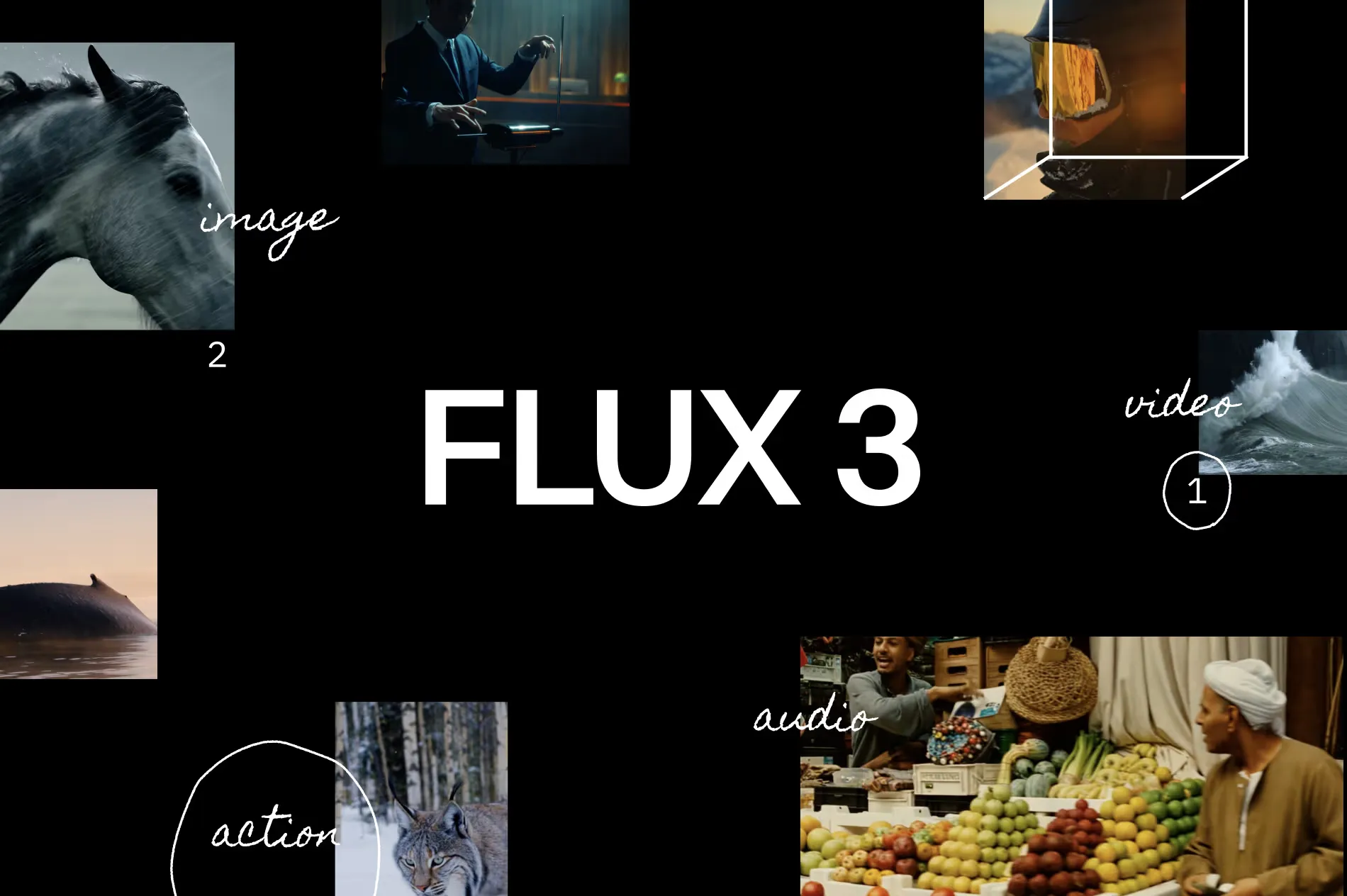
Official Flux 3 Video product preview used as visual context for the review workflow.
Why Deterministic Testing Techniques Fail Here
The first instinct for a tester is to treat the generation step like any external API call: mock it, assert on shape, move on. That works for structural checks (did the service return a file, is the duration within range, is the codec correct) but it does not validate content quality, and content quality is usually the actual risk.
A second instinct is to build a golden-output comparison, similar to visual regression testing for UI. This fails for a different reason: golden-output testing assumes the same input should always produce the same output, and generative video/audio pipelines are explicitly designed not to guarantee that. Attempting to force determinism (fixed seeds, frozen model versions, locked prompts) narrows variability but does not eliminate it, and over-constraining the pipeline defeats the purpose of using a generative tool in the first place.
What does transfer from traditional testing is the idea of a verification gate: a checkpoint with explicit pass/fail criteria that runs before an asset moves downstream, plus a metadata trail that lets someone reconstruct what was requested, from which references, and under which review outcome. That is the artifact worth building, rather than trying to fake determinism.
One generation step in a pipeline like this could be a tool such as the Flux 3 Video generator, which, according to the product page, converts text prompts, images, and creative references into AI video clips through audio-ready workflows. In this context, the generator is a component that produces candidate assets — the pipeline's job is to decide what happens to those candidates next, not to trust them by default.
A Reproducible Intake-and-Review Artifact
Below is a minimal YAML structure for tracking a single generation request through intake, generation, and review. It is intentionally tool-agnostic; the generation step is a placeholder for whichever service produces the asset.
asset_request:
  request_id: gen-2026-0091
  requested_by: campaign-team
  input:
    prompt: "short text prompt or reference description"
    reference_assets: ["image-01.png"]
    intended_use: "demo clip for internal review"
  generation:
    service: "external-video-generator"
    parameters_logged: true
    output_file: "clip-0091.mp4"
    duration_seconds: null   # filled after generation, not assumed
  review:
    reviewer: null
    checklist_passed: null
    failure_reason: null
    status: "pending"        # pending | approved | rejected | needs-regeneration
The checklist attached to review is where verification actually happens:
- Does the output length fall within the range the downstream system expects?
- Is there audio present where the workflow requires it, and is it synced to visible action?
- Does the visual content match the creative brief closely enough to be usable without misrepresenting the brand or subject?
- Are there obvious artifacts (warped frames, garbled audio) that would fail a basic sanity check?
- Has the request metadata been logged before the reviewer signs off, so the request is reproducible later even if the output is regenerated?
This artifact does not test the model. It tests whether the pipeline around the model behaves predictably: logging inputs, gating outputs, and recording a decision.
Verification Gates and Failure Branches
A useful gate needs explicit failure branches, not just a single pass/fail flag. In practice, three branches cover most cases:
- Structural failure — file missing, duration out of range, wrong format. This can be checked programmatically before a human ever looks at the asset.
- Content mismatch — technically valid output that does not match the brief closely enough. This requires human judgment against the checklist above, and the failure reason should be logged as free text tied to the
request_id. - Silent drift — output that passes the checklist but subtly deviates from intent (tone, pacing, framing). This is the hardest branch, and the only mitigation is periodic manual audits of approved assets, not just rejected ones, since a pipeline that only reviews rejections will accumulate blind spots.
Each branch should feed back into either a regeneration request (with adjusted prompt or reference) or an escalation to a human creative reviewer. Treating rejection as a dead end, rather than a loop back into the request record, is a common design mistake — it breaks the audit trail the artifact is meant to preserve.
Tradeoffs and Conclusion
Building this kind of gate has a cost: every generation request now carries logging overhead, and every review adds latency compared to an ungated pipeline. Teams that need fast iteration on creative drafts may find the checklist too heavy for early exploration and better suited to a later, pre-publish stage. There is also a tradeoff in how strict the content-mismatch criteria are — overly strict checklists push everything into regeneration loops, while overly loose ones let drift through unnoticed.
None of this makes generative video or audio tooling deterministic, and no verification layer will fully substitute for human judgment on creative fit. What a structured intake-and-review artifact does provide is a consistent point of accountability: a record of what was asked for, what was produced, and why a human approved or rejected it. That is a modest but durable improvement over ad hoc review, and it is the part of the workflow worth investing engineering time in, regardless of which generation service sits behind the gate.
All rights reserved